

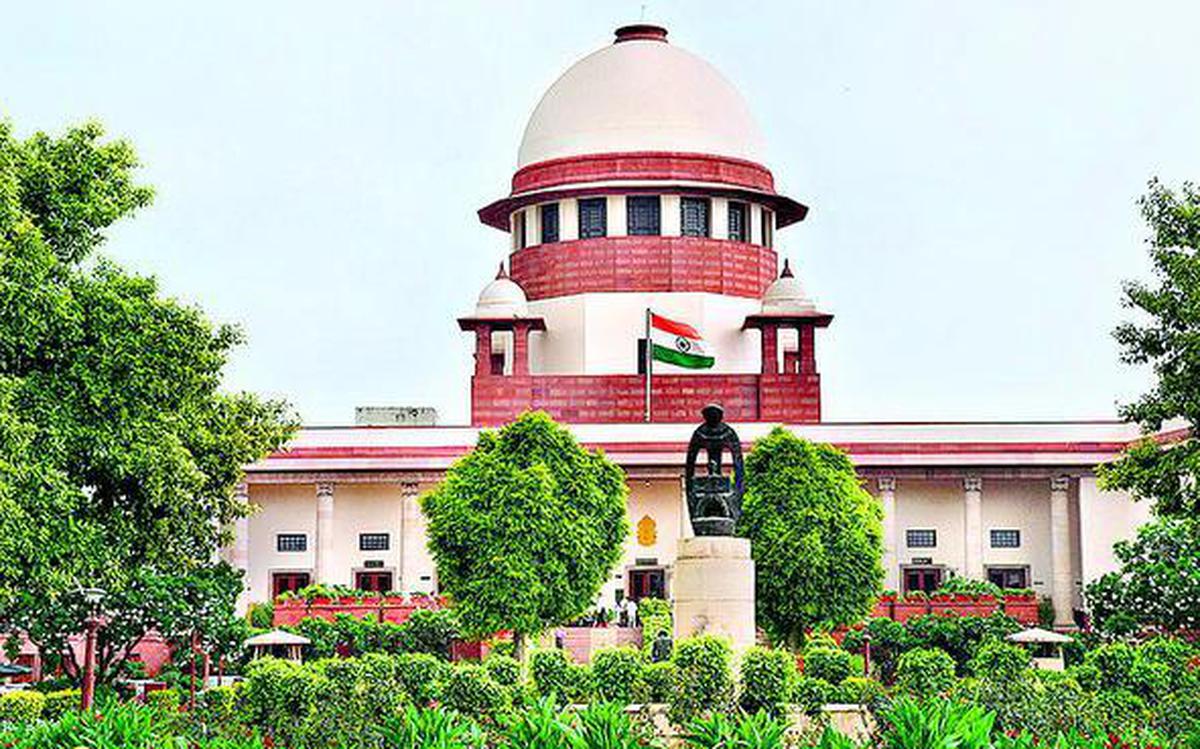
The Supreme Court has taken a strict stance on the rising cases of digital arrest scams and cyber fraud across the country by issuing a series of significant interim directions. A Bench headed by Chief Justice Surya Kant directed the Reserve Bank of India (RBI) to prepare a comprehensive Standard Operating Procedure (SOP) within four weeks to deal with mule accounts and other bank accounts used in cyber crimes. The SOP is to be circulated to the Registrars General of all High Courts to ensure uniform implementation across the country.
During the hearing, the court noted that coordinated efforts by the Central Government, the Indian Cyber Crime Coordination Centre (I4C), the Central Bureau of Investigation (CBI), RBI, banks, and other agencies have helped reduce the number of digital arrest complaints. According to the data presented before the court, complaints declined from 123,672 cases in 2024 to 58,249 cases in 2025, while only 16,377 complaints were recorded up to June 30, 2026. The court observed that although financial losses have also reduced, continuous monitoring remains essential.
The Bench noted that the Money Restoration Mechanism has helped victims recover approximately ₹18.05 crore across 36,290 cases. It also observed that the e-Zero FIR system has been implemented in 19 states, while only 14 states have established dedicated State Cyber Crime Coordination Centres.
Referring to CBI investigations, the court stated that the agency is currently investigating 10 major digital arrest cases. In one such case, investigators identified 238 victims, 67 bank accounts, and suspicious transactions worth nearly ₹80 crore. Raids were conducted at 93 locations across 16 states as part of the investigation.
Key Directions Issued by the Supreme Court
- RBI must prepare an SOP on mule accounts within four weeks and circulate it to all High Courts.
- All states and Union Territories must fully implement the Grievance Redressal Module and Money Restoration Module.
- High Courts should ensure that subordinate courts are informed about these mechanisms so that victims of frozen bank accounts can first use the available restoration process.
- States that have not yet implemented State Cyber Crime Coordination Centres or the e-Zero FIR system must do so within four weeks.
- Cases involving frozen bank accounts linked to cyber fraud should be disposed of promptly.
- The Central Government should launch nationwide awareness campaigns on digital arrest scams, cyber fraud reporting, and fund recovery mechanisms.
- Banks and digital platforms should develop advanced technological safeguards to prevent digital arrest frauds and facilitate quicker investigations.
- State Legal Services Authorities should conduct awareness drives on cyber safety and digital arrest scams.
The Supreme Court also directed the Centre's inter-departmental committee to examine the possibility of introducing a shared liability framework and a victim compensation mechanism for cyber fraud cases. The court observed that while progress has been encouraging, these mechanisms must now be implemented effectively across the country.








.jpg)
.jpg)

-1785947114679_v.webp)


.jpeg)


.jpeg)

-1785425336854_v.webp)
































.jpeg)




.jpg)
.jpg)
.jpg)
.jpg)
.jpg)
.jpg)
.jpg)
.jpg)
.jpg)
.jpg)
.jpg)
.jpg)
.jpg)