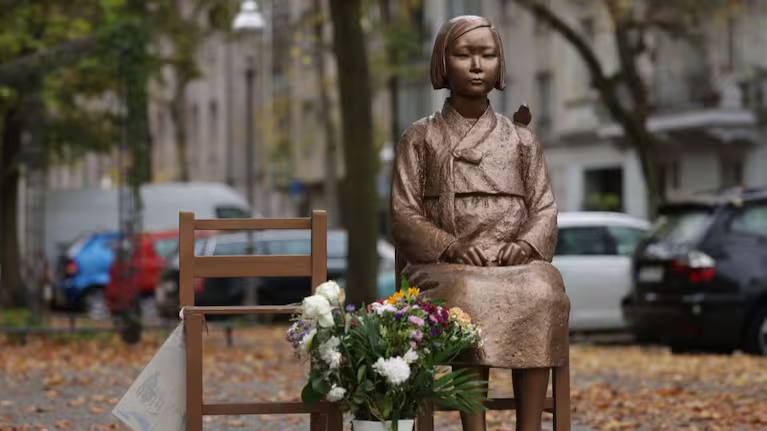




Japan has warned that diplomatic relations with New Zealand could be jeopardised if a proposed “comfort women” statue is installed in Auckland, highlighting ongoing tensions over historical interpretations of wartime actions. The bronze statue, depicting a seated girl beside an empty chair, has been donated by the Korean Council for Justice and Remembrance to honour victims of sexual slavery during the second world war and is planned for installation in a Korean cultural garden at Barry’s Point Reserve, pending local approval later this month.
The issue of so-called “comfort women” remains deeply sensitive, with historians estimating that up to 200,000 women many from Korea, China, and other parts of Asia were forced into sexual servitude for Japanese soldiers between 1932 and 1945. Survivors have long criticised the term itself, arguing it downplays the brutality they endured, including repeated sexual violence, poor medical care, and inhumane living conditions.
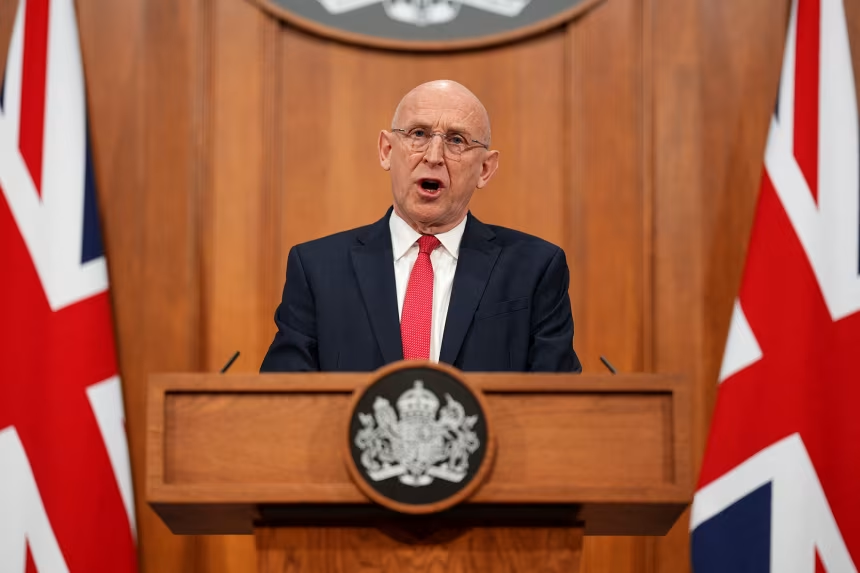
In a submission to Auckland Council, Japanese Ambassador Makoto Osawa warned that highlighting the issue through such a statue could strain not only Japan’s ties with New Zealand but also its relationship with South Korea. Japanese officials argue that the matter was resolved through a 2015 agreement between Tokyo and Seoul, which included financial support for survivors, although that deal has since been criticised and partially dismantled by subsequent South Korean leadership.
Japan’s embassy has also expressed concern that similar statues in other countries have led to diplomatic disputes and community divisions, citing past incidents where international relationships were affected. Meanwhile, New Zealand officials have acknowledged the sensitivity of the proposal but emphasised that decisions regarding public monuments rest with local authorities and communities.
Public opinion in Auckland appears divided, with submissions to the council showing both strong opposition and support. Advocates argue the statue would serve as a powerful reminder of historical injustices and a stand against sexual violence, while critics fear it could inflame political tensions and disrupt community harmony. As the decision date approaches, the proposal has become a focal point for broader debates over historical memory, accountability, and international diplomacy.








.jpg)
.jpg)