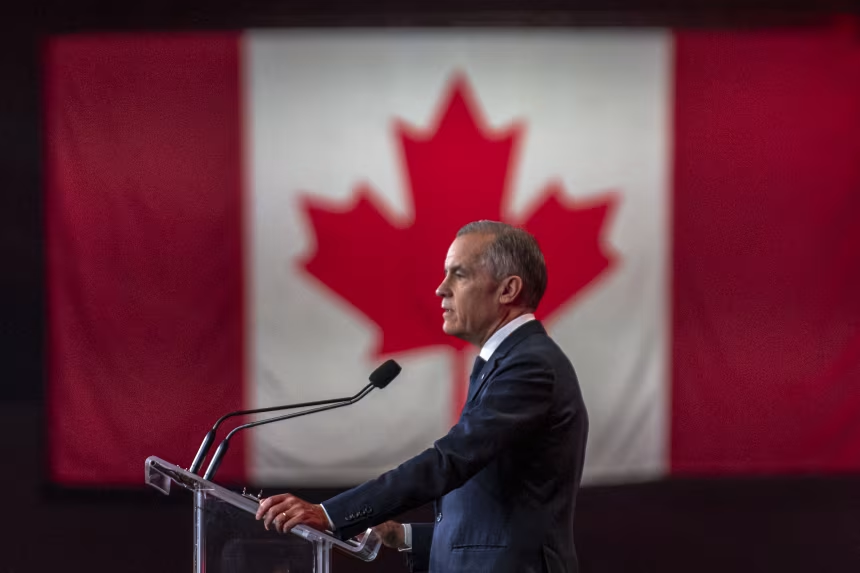



Mark Carney has secured a stronger political mandate in Canada after his Liberal Party achieved a majority government, reinforcing his ability to push back against Donald Trump and his policies.
The Liberals are projected to reach 173 seats in the House of Commons just above the threshold required for a majority following key by-election victories and a series of high-profile defections from opposition parties. One closely contested race in Quebec remains undecided, but the results so far have already solidified Carney’s hold on power.
Carney’s rise comes after the resignation of former Prime Minister Justin Trudeau, and marks a significant turnaround for the Liberal Party. Since taking office, Carney has positioned himself as a leading global critic of Trump’s “America First” agenda, particularly opposing tariffs and remarks suggesting the annexation of Canada.
With a majority now secured, Carney is expected to accelerate policies aimed at reducing Canada’s economic dependence on the United States and strengthening alliances with other global powers. His approach to dealing with Trump has been described as firm yet measured “respect, but not obsequiousness” highlighting a strategy of engagement without submission.
Trump’s aggressive stance toward Canada has also sparked a wave of national unity. Many Canadians have responded by avoiding travel to the US and boycotting American products, reflecting a broader shift in public sentiment. Carney has embraced this momentum, framing it as an opportunity to reinforce national identity and sovereignty.
However, his strategy of welcoming opposition defectors into the Liberal Party has raised concerns among some party members. Critics argue that such moves could dilute core party values, especially on sensitive issues like abortion rights.
Despite internal tensions, Carney’s strengthened mandate gives him significant political leverage at a time of heightened global uncertainty, positioning Canada to take a more assertive role on the world stage.









.jpg)
.jpg)

.jpeg)





.jpeg)









.jpeg)





.jpeg)


.jpeg)














.jpeg)
.jpeg)




.jpeg)
.jpeg)




















.jpeg)















.jpeg)




.jpeg)



.jpeg)


.jpeg)

















.jpeg)


.jpeg)


.jpeg)