



Japan is undergoing one of its most significant defence transformations since the end of the Second World War, expanding its military posture in the southwest as regional tensions intensify and confidence in United States security guarantees shows signs of weakening.
The shift is centred on Japan’s southern island chain, particularly Kyushu and nearby territories, where long-range missile systems have recently been deployed. These systems mark a departure from purely defensive positioning, as they are capable of reaching targets beyond Japan’s borders, including parts of China. Officials have described the current security landscape as the most complex and severe the country has faced in the post-war era.
This evolving strategy, often referred to as the “southern shield,” focuses heavily on the Nansei or Ryukyu island chain, which stretches toward Taiwan. These islands hold strategic importance, forming a natural barrier between key regional waterways and acting as a frontline in broader Indo-Pacific security dynamics.
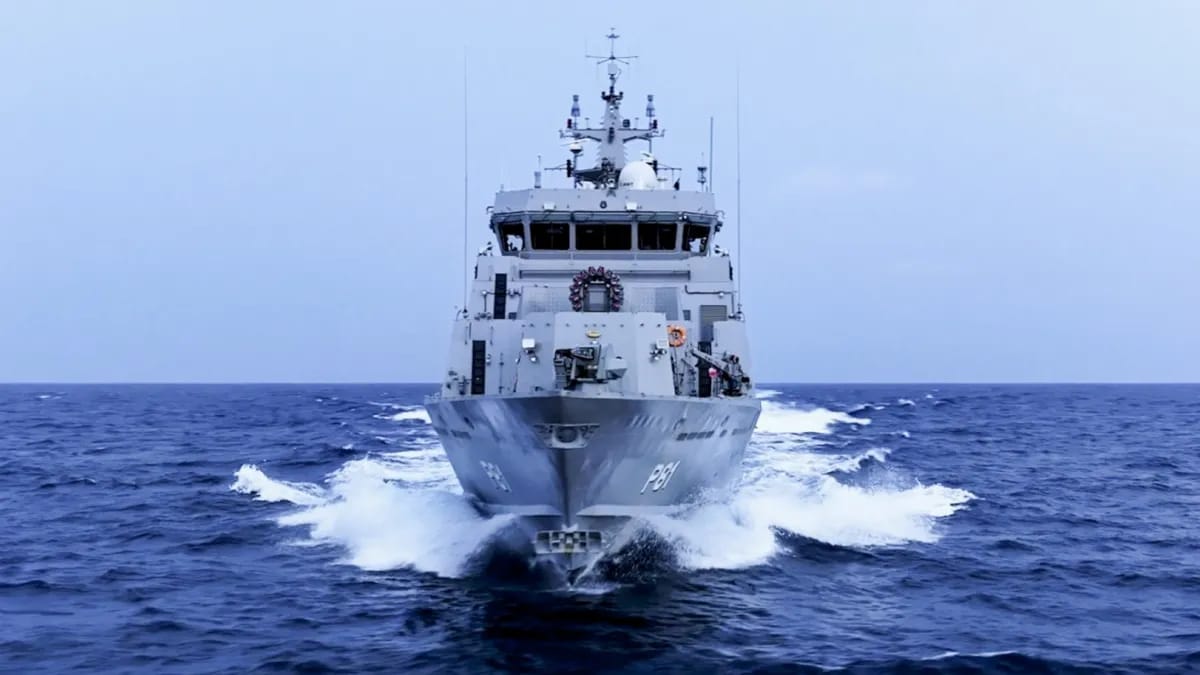
Japan’s defence budget has also surged, reflecting this growing emphasis on military readiness. The latest allocation includes investments in advanced missile systems, electronic warfare capabilities and air defence assets. Analysts say the aim is to strengthen deterrence by creating layers of defence that could complicate any potential military operations by rival powers in nearby waters.
A key element of this transformation is Japan’s move toward what it calls “counterstrike capability.” This allows the country to respond to an attack by striking enemy positions, stretching the traditional interpretation of its pacifist constitution, which limits military action to self-defence. Instead of formally amending the constitution, successive governments have reinterpreted its provisions to expand the scope of permissible military activity.
The Japan Self-Defense Forces, originally established with a limited role focused on disaster relief and national protection, have gradually evolved into a modern military force. Public opinion has also shifted over time, with increasing acceptance of a stronger defence posture, particularly in response to regional threats such as North Korean missile tests and ongoing territorial disputes with China.
While China’s growing military presence remains a major driver behind Japan’s strategy, analysts note that concerns about the reliability of US security commitments are also influencing Tokyo’s decisions. Changes in American foreign policy and a stronger focus on domestic priorities have led to doubts about whether Washington would respond decisively in a regional conflict.
This uncertainty has encouraged Japan to take a more proactive role in its own defence while strengthening ties with other regional partners. It has also prompted discussions around broader strategic capabilities, including the ability to sustain long-term deterrence in the face of evolving threats.
At the same time, Japan is adapting to modern warfare trends, including the use of drones and supply chain vulnerabilities, which are expected to play a key role in future conflicts. Recent policy changes allowing the export of defence equipment further indicate a shift toward building a more self-reliant and technologically advanced military sector.
As tensions continue to rise in the Indo-Pacific, particularly over Taiwan, Japan’s evolving defence posture reflects a balancing act between its pacifist legacy and the demands of an increasingly uncertain security environment






.jpg)
.jpg)