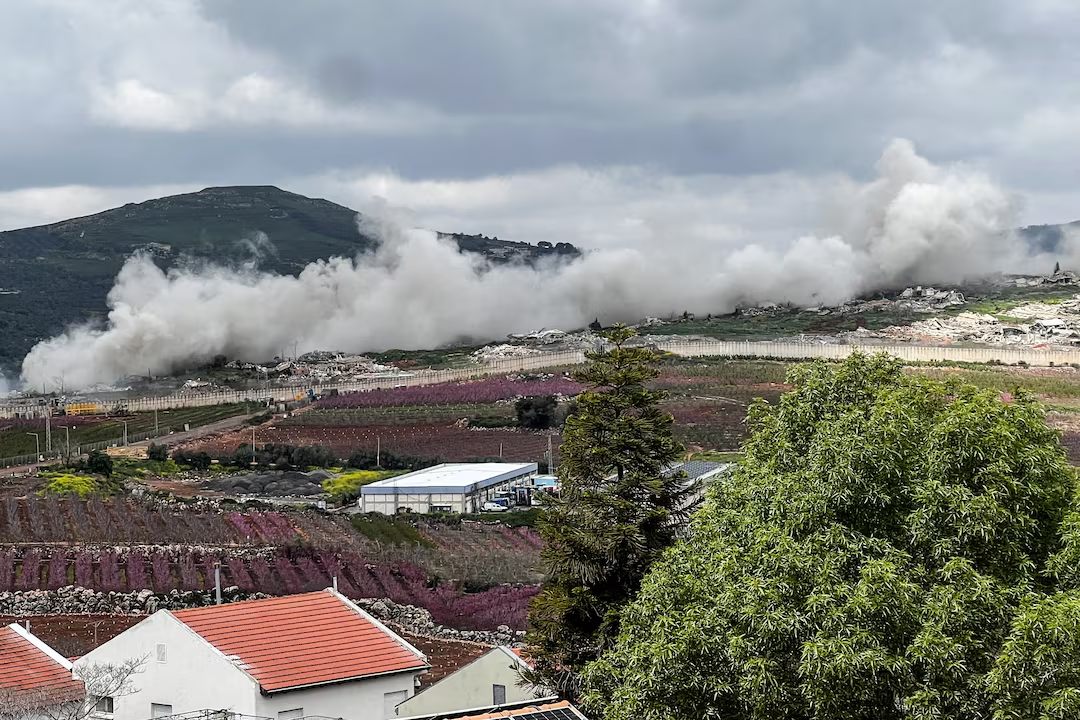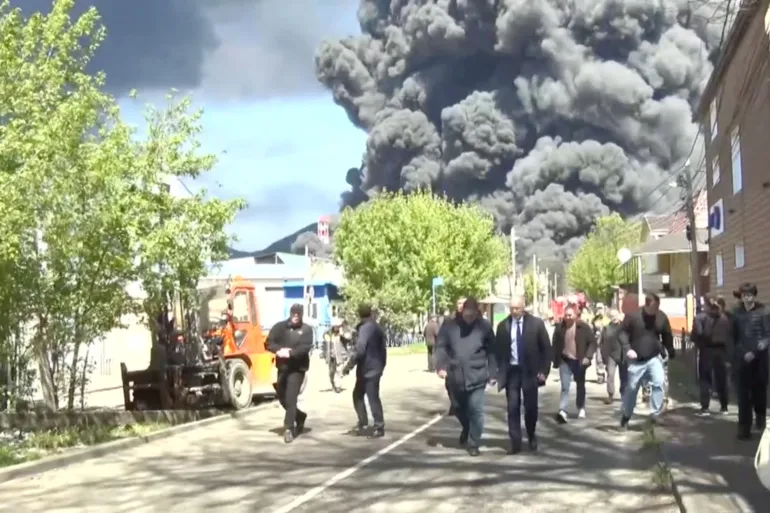




Fears of a major environmental disaster are growing in southern Russia after repeated drone strikes targeted a key oil refinery in the coastal town of Tuapse, along the Black Sea. The attacks have caused fires, toxic pollution, and oil spills that are now affecting both land and marine ecosystems.
Local volunteers describe alarming conditions in the aftermath. A thick layer of black residue has covered vehicles, buildings, and animals, while a strong oily smell lingers in the air. Residents have also reported an unusual phenomenon known as “black rain,” where droplets mixed with soot and ash fall from the sky following large-scale fires.
The refinery, one of the largest in the region, was struck multiple times in April. Initial attacks triggered fires that burned for days, sending dense plumes of smoke into the atmosphere. Air quality tests conducted after the incidents revealed that harmful substances such as benzene and soot were present at levels significantly above safety limits. Authorities advised residents to stay indoors and wear protective masks when outside.
Environmental damage has extended beyond the refinery site. Several storage tanks were destroyed, leading to oil leaking into the nearby river and eventually reaching the Black Sea. The spill has spread along large sections of the coastline, contaminating beaches and threatening marine life.
Emergency teams and volunteers have been working to contain the damage. Boats have been deployed to manage the oil slick at sea, while barriers have been installed along the coast to limit its spread. Cleanup crews are removing contaminated soil and collecting oil residue, but the scale of the damage has made the task extremely challenging.
Wildlife has been heavily affected. Birds, in particular, face severe risks as oil coats their feathers, making it difficult to fly and increasing the chance of poisoning. Volunteers have set up rescue centres to clean and treat affected animals, including birds, cats, and dogs found covered in oil.
Experts warn that the long-term environmental impact could be severe. Oil contamination can settle on the seabed, disrupting marine ecosystems and damaging the food chain. Reduced oxygen levels in the water may lead to mass deaths of fish and other marine species, while toxins can accumulate in living organisms over time. Recovery of biodiversity in affected areas could take years.
The latest incident adds to a series of environmental crises linked to the ongoing conflict. Previous damage to infrastructure and ecosystems has already resulted in pollution, habitat destruction, and wildlife loss across the region.
Analysts suggest that attacks on energy infrastructure may continue, as such facilities are large, fixed targets that are difficult to defend. Continued strikes could further increase environmental risks, especially if additional spills or fires occur.
As cleanup efforts continue in Tuapse, concerns remain that the full extent of the damage may only become clear over time, with lasting consequences for both the environment and local communities.







.jpg)
.jpg)