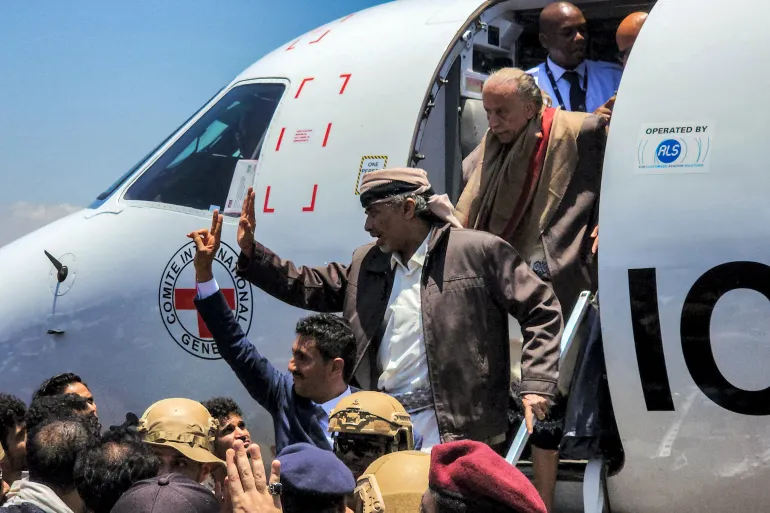



Yemen’s internationally recognised government and the Houthi group have agreed to exchange more than 1,600 prisoners in what officials described as the largest detainee swap since the country’s civil war began in 2014.
The agreement was signed during United Nations-backed negotiations held in Amman, Jordan, after months of discussions between the two sides.
According to Houthi officials, the group will release 580 detainees, including seven Saudi nationals and 20 Sudanese prisoners. In return, the Yemeni government will release about 1,100 Houthi prisoners.
Government negotiator Yahya Kazman said nearly 1,728 detainees from both sides would ultimately be released under the deal, calling it the “largest” prisoner exchange reached during the conflict.
The accord follows consultations facilitated by the United Nations in Muscat, Oman, last year and includes plans for further negotiations aimed at securing additional releases in the future.
Both parties also agreed to allow mutual visits to detention centres and coordinate the operation with the International Committee of the Red Cross (ICRC), which will oversee the transfers and reunifications.
Officials said the agreement covers military personnel, security officers, political detainees, journalists and fighters held by both sides for years.
The Houthis described the agreement as an important humanitarian step that could ease the suffering of detainees and their families. The group reiterated support for a broader “all for all” prisoner release arrangement.
The ICRC welcomed the agreement and called it a crucial breakthrough in humanitarian efforts linked to the war.
Christine Cipolla, the ICRC’s head of delegation in Yemen, said the agreement had brought families closer to long-awaited reunions and confirmed the organisation was prepared to act as a neutral intermediary during the release process.
A previous large-scale prisoner exchange took place in April 2023, when nearly 900 detainees were released in an operation coordinated by the ICRC.
Yemen’s conflict began after the Houthis seized the capital, Sanaa, in 2014. A Saudi-led coalition intervened the following year in support of the Yemeni government, turning the conflict into a prolonged regional war.
The war has killed tens of thousands of people, devastated Yemen’s infrastructure and created one of the world’s worst humanitarian crises.







.jpg)
.jpg)