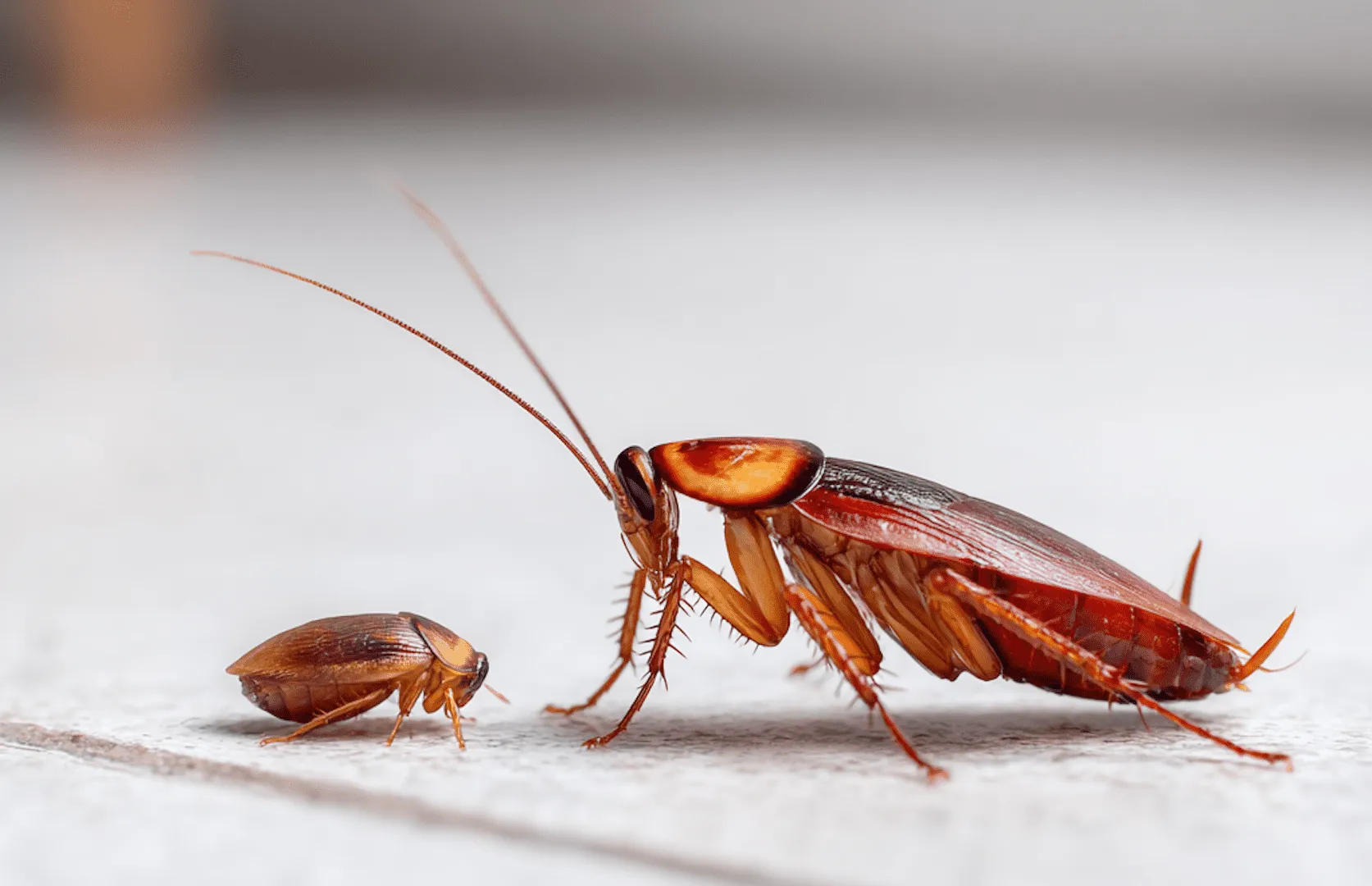



Cockroaches are among the most resilient creatures on Earth, and one of their most astonishing abilities is surviving for several days without a head.
Scientists explain that a cockroach's nervous system is not entirely controlled by its brain. Nerve clusters located throughout its body can continue regulating basic functions even after the head is removed.
Its circulatory system is also different from that of mammals. Cockroaches use a fluid called hemolymph that circulates through an open system, allowing vital functions to continue despite severe injuries.
Another key factor is their breathing mechanism. Instead of relying on a nose or lungs, cockroaches breathe through tiny openings called spiracles located along their bodies. This enables oxygen to reach tissues without the need for a functioning head.
Researchers say a headless cockroach can survive for about seven to ten days. Eventually, it dies because it can no longer consume food or water.
The phenomenon has attracted significant scientific interest, as studying cockroach survival mechanisms may provide insights into neurobiology, adaptation, and pest-control strategies.




.jpg)
.jpg)



.jpg)
.jpg)
.jpg)
.jpg)
.jpg)