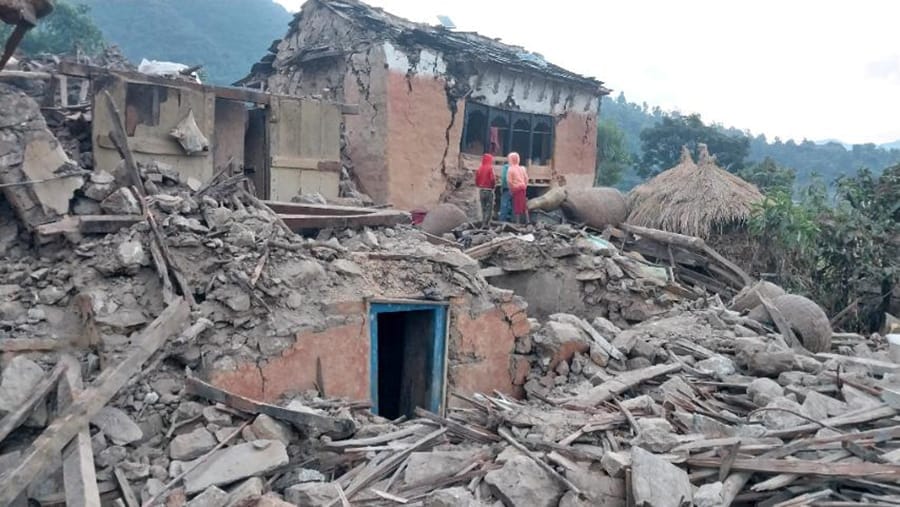


The devastating floods in Nepal have once again highlighted the environmental vulnerability of the Himalayan region and the potential risks for countries sharing the mountain ecosystem. Nepal Foreign Minister Shishir Khanal has expressed concern over the possible impact of changing Himalayan conditions on India and other neighbouring countries.
Khanal said that Nepal and India have traditionally viewed their relationship through social, cultural and civilisational ties. However, he stressed that changing environmental conditions require the two countries to look at their relationship from an environmental and climate perspective as well.
'Whatever melts in the Himalayas eventually reaches the sea'
Speaking about the recent flooding, Khanal said that whatever melts in the Himalayas eventually flows downward through rivers and reaches the sea. He pointed to the sudden rise in water flow in Nepal's Himalayan region and said such events can cause widespread destruction.
According to him, extreme weather events in the Himalayan region should not be viewed merely as local disasters. Sudden changes in river flows, melting ice and glaciers, and episodes of intense rainfall can have consequences beyond national borders.
Why could India face a risk?
Nepal and India share several major river systems. Any sudden increase in water flow from Himalayan areas of Nepal can therefore have consequences for downstream regions in India. Khanal highlighted this interconnectedness and said that developments in the Himalayan region need to be treated as a shared environmental concern.
He noted that although the recent flooding did not cause a major impact in India, similar incidents could affect the country in the future. Climate change and increasingly unpredictable weather patterns may further increase the risks associated with extreme rainfall and sudden flooding.
Four countries linked by one ecosystem
Khanal also highlighted the ecological connection between China, Nepal, India and Bhutan. He said the future and well-being of these countries are closely connected to the health of the Himalayan ecosystem.
He stressed that political differences may exist between countries, but environmental and climate-related challenges require cooperation. The Himalayas are among the world's most environmentally sensitive mountain regions, and the effects of climate change are increasingly visible there.
Water security could become a major concern
The Nepalese minister warned that environmental changes in the Himalayan region could create serious challenges for water availability in the future. He said the consequences may extend beyond floods and landslides and could eventually affect access to drinking water.
According to his assessment, the lives and future of nearly two billion people across the wider region are connected to the Himalayan water system. This makes cooperation on environmental protection, water management and climate-related risks increasingly important.
Greater regional cooperation needed
The recent floods in Nepal have once again highlighted the need for stronger disaster preparedness and environmental cooperation across the Himalayan region. Sharing information on rivers, glaciers and water sources, improving early-warning systems and strengthening cross-border disaster response could help reduce the impact of future disasters.
Khanal's remarks underline the need to view the Himalayas not simply as separate territories belonging to individual countries, but as a shared ecological region. Protecting the Himalayan environment, he suggested, is essential for maintaining water security and ecological balance across South Asia.




.jpg)
.jpg)