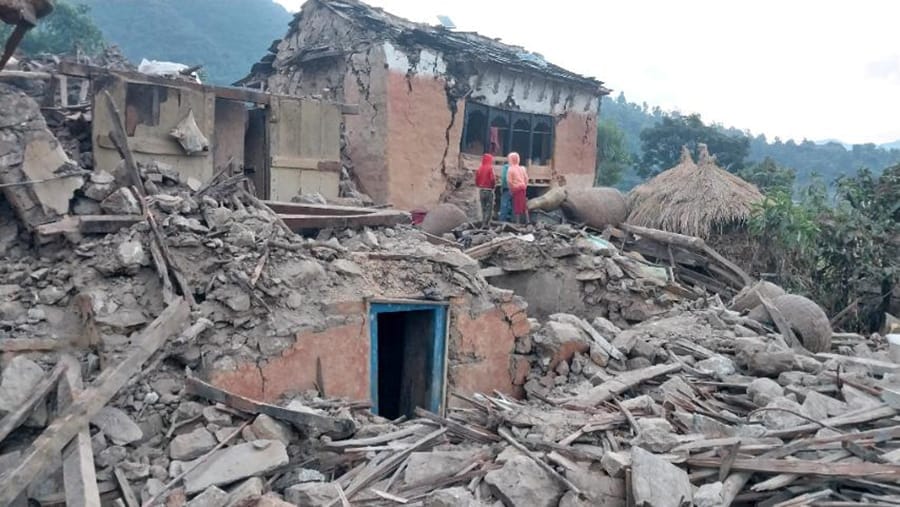


Nepal has been facing a major natural disaster after intense rainfall triggered severe flooding and landslides across several areas. The disaster has affected homes, roads, public infrastructure and educational institutions, leaving communities struggling to cope with rising water levels and widespread damage.
Among the many affected areas, an incident at a school in Dhading has highlighted how timely action and the alertness of teachers helped protect children during the crisis. The school was struck by rapidly rising floodwater at a time when students were on their lunch break.
Because the children were already outside their classrooms, the situation gave teachers a crucial opportunity to move them away from the danger zone. As water began entering the school premises, teachers quickly alerted the students and instructed them to leave the building. They were also told not to waste time collecting their school bags, lunch boxes or other belongings.
The decision proved particularly important for younger students, including children studying in Class 2. The floodwater was reportedly entering the school rapidly, leaving little time for people inside the building to react. By asking the children to leave immediately, teachers were able to help a large number of students reach safety.
The school was left heavily damaged after the flood. Thick layers of brown and grey mud covered benches, floors and walls. The school courtyard was filled with silt and debris, while classrooms were left covered in mud brought in by the floodwater.
Marks left on the walls showed how high the water had risen. Benches and other classroom materials were covered in mud, while small school bags and other belongings belonging to children could be seen scattered across the floors.
For families, the loss of school bags, books and other belongings was secondary to the fact that their children survived. One mother reportedly said that although her son’s school bag could not be found, his survival was what mattered most to her.
The damage to the school has also raised concerns about the future of education in the affected communities. Cleaning classrooms, removing mud and debris, assessing structural damage and restoring basic facilities could take considerable time.
The floods have disrupted the education of thousands of children across affected districts. According to available figures, at least 69 schools in severely affected areas of Nepal have either been destroyed or damaged. The disruption could affect around 19,000 children. Officials and relief agencies have warned that the scale of the damage may increase as rescue and assessment teams reach more remote areas.
The disaster has therefore created a second major challenge for families: ensuring that children can return to education after the immediate emergency is brought under control. For families that have already lost homes, belongings or sources of income, rebuilding their children’s education may become an additional burden.
Authorities have also ordered the closure of schools and universities in several parts of Nepal following the heavy rainfall, flooding and landslides. Academic activities have been temporarily suspended in affected areas, while university examinations have also been postponed.
The decision to close educational institutions is aimed at protecting students and staff while the weather and flood situation remains unstable. Communities continue to receive warnings about possible flooding and are being advised to move towards higher and safer areas whenever necessary.
The exact date for reopening schools remains uncertain in areas where floodwater, mud and landslide risks continue to pose a threat. Even after the immediate danger passes, damaged school buildings may require inspection and repairs before students can safely return to classrooms.
The disaster has also affected areas close to Nepal’s northern border. Reports from the region indicated deaths and missing people on the Chinese side of the border as well. Information regarding missing foreign nationals in the Tibet region also emerged during the crisis.
Nepal’s disaster management authorities had reported that the death toll had risen to 788, while 2,502 people were reported missing. Chinese authorities also reported casualties and missing people in affected areas on their side of the border. As rescue and relief operations continue, authorities are working to establish a clearer picture of the overall damage.
The incident at the Dhading school has become an important example of how a small window of time can make a major difference during a natural disaster. The fact that students were on their lunch break, combined with the quick response of teachers, helped many children move away from the danger before the floodwater could overwhelm the school.
While the immediate priority remains the safety of communities, authorities will also face the difficult task of restoring damaged schools and ensuring that children can return to education. The recovery process could take time, particularly in areas where infrastructure has suffered extensive damage.
For the families whose children survived the disaster, however, the most important outcome remains their safety. School bags, books and other belongings can eventually be replaced, but the timely evacuation of the children ensured that a much more serious tragedy was avoided.




.jpg)
.jpg)