

*New Delhi:* Military tensions between the United States and Iran have escalated further, with the confrontation increasingly spilling into the waters around the Persian Gulf and the strategic Strait of Hormuz.
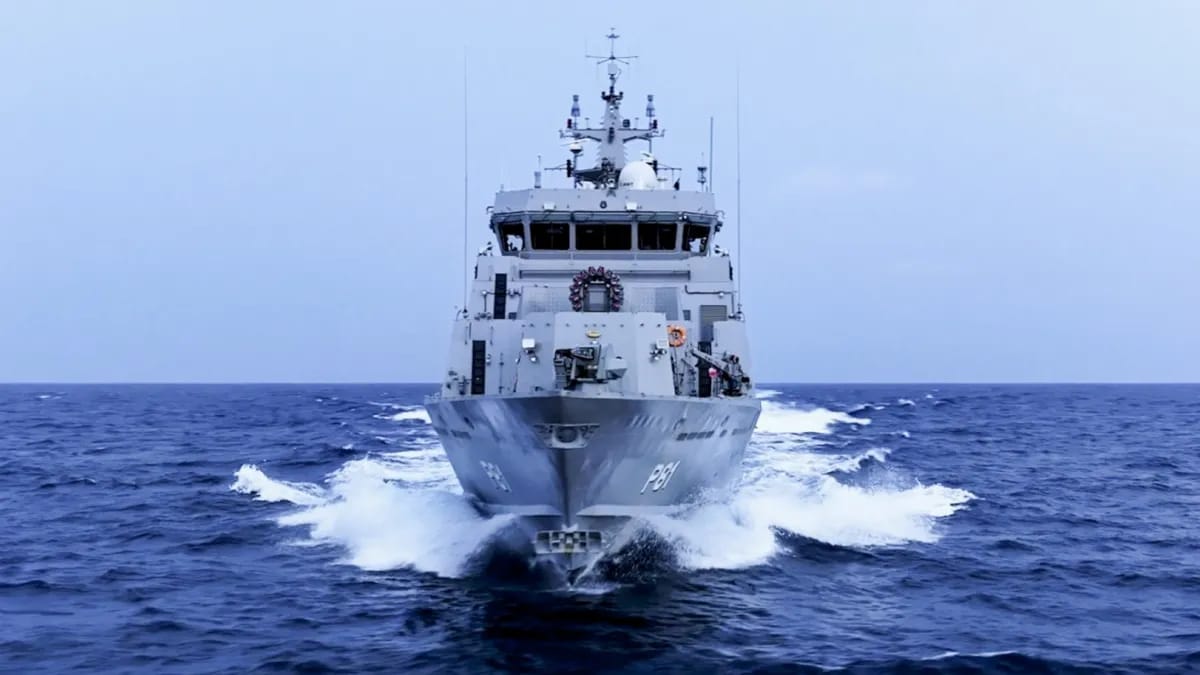
The latest escalation followed US military strikes against Iranian oil tankers after Iran's Islamic Revolutionary Guard Corps launched ballistic missiles toward two US Navy warships. According to the US military, the American vessels avoided the attacks and no US personnel were injured.
Iran subsequently claimed that its forces had targeted vessels in the Gulf and around the Strait of Hormuz in retaliation for the American strikes. The confrontation has raised fresh concerns about the safety of one of the world's most important maritime routes.
Iran Responds to US Tanker Strikes
The US military said it had targeted three Iranian crude oil carriers following the missile attacks on American warships. Washington said the vessels were connected to a network that financially supported Iran's Revolutionary Guard and allied armed groups in the region.
According to the US Central Command, two of the Iranian tankers were permanently disabled, while another unladen tanker was destroyed. The US military said the crews were instructed to abandon the vessels before the strikes.
Iran responded by warning ships operating in the Gulf and around the Strait of Hormuz against what it described as suspicious or unauthorised movements. Iranian forces later claimed to have targeted oil tankers and US-linked vessels.
### Strait of Hormuz at the Centre of the Crisis
The Strait of Hormuz has emerged as the central flashpoint in the latest confrontation. The narrow waterway is one of the world's most important routes for the transportation of oil and other energy products.
Any prolonged military confrontation in the area could have consequences far beyond the immediate region. Disruption to shipping through the strait could affect global energy supplies, insurance costs, freight rates and oil prices.
Iran has sought to exert greater control over maritime movement around the strait, while the United States has insisted that the international waterway should remain open.
Recent shipping data shows that commercial traffic through the Strait of Hormuz has fallen well below its recent average, indicating that the escalating military confrontation is already affecting maritime activity.
### Missile Attack on US Base in Jordan
The escalation has also extended beyond the maritime theatre. Iran launched ballistic missiles toward a US military facility in Jordan, according to reports.
Jordanian authorities said its air defence systems intercepted most of the missiles. Officials reported that 18 of 20 missiles were intercepted, while the remaining projectiles fell in open areas. No major casualties were immediately reported.
The incident demonstrates the expanding geographical scope of the confrontation and the increasing risks faced by US military facilities across the region.
### Iran Had Already Signalled a Tougher Military Policy
Iran had recently signalled a tougher approach toward what it considers external threats. Tehran has highlighted its Qassem Basir ballistic missile as an example of its growing military capabilities.
Iranian official Mohsen Rezaei claimed that the missile had been tested against a US warship, although details surrounding the alleged test remained unclear.
Iran has described the missile as having a range of at least 1,200 kilometres and improved accuracy. The announcement came amid the escalating confrontation with the United States and increasing military activity around the Gulf. ([AP News][5])
Washington Rejects Any Iranian Exclusion Zone
The United States has rejected Iranian proposals or claims regarding restrictions on maritime movement through the Strait of Hormuz.
Washington maintains that the waterway should remain open to international shipping and says it is taking steps to protect commercial traffic.
The US has also said its forces have conducted mine-clearing operations in the strait to reduce the threat to commercial vessels. The operation has been described as part of wider efforts to restore safe maritime movement. Global Shipping Faces Growing Pressure
The latest escalation is already affecting commercial shipping. Operators are facing increased security risks, while vessels are reducing or altering their movements through the region.
The Strait of Hormuz is particularly important because a significant volume of global oil and energy products passes through the waterway. A prolonged disruption could therefore place additional pressure on international energy markets.
Recent shipping data indicates that traffic through the strait remains significantly below its recent average. The reduction has intensified concerns over energy supplies and the potential impact on oil prices.
US and Iran Remain Locked in Escalation
The United States says its military operations are aimed at protecting American forces and maintaining maritime security. Iran, meanwhile, says it is responding to American military pressure and what it describes as restrictions on Iranian shipping.
The confrontation now involves more than direct military strikes. Oil exports, maritime routes, sanctions, port access and control over the Strait of Hormuz have all become central elements of the dispute.
The biggest concern is that continued tit-for-tat attacks could trigger a much wider regional conflict and create further instability in global energy markets. International attention is now focused on the movement of commercial vessels through the Strait of Hormuz and the next military moves by Washington and Tehran.




.jpg)
.jpg)