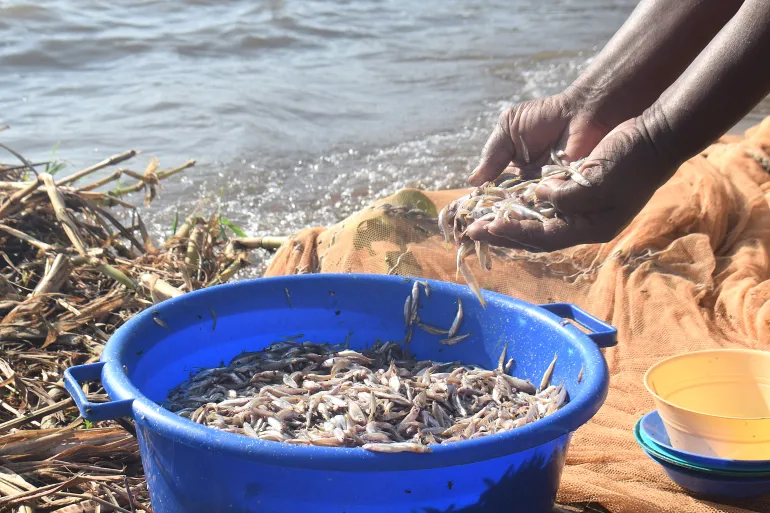

In a lakeside village in Kisumu County, Kenya, a quiet social transformation is underway as women challenge long-standing taboos that once barred them from fishing on Lake Victoria. What began as an act of defiance has evolved into a survival strategy, driven by economic hardship and environmental change.
Rhoda Ongoche Akech, now 61, became the first woman in her community to step into a fishing boat in 2002. At the time, cultural beliefs discouraged women from entering the lake, fueled by myths that their presence would bring bad luck or reduce fish catches. Despite criticism and social pressure, Akech persisted, determined to support her family as income from fish trading declined.
For years, she fished alone, but gradually other women followed. By 2018, more women began joining her, and today a small but growing group of female fishers operates in the area. Their participation reflects a broader shift in attitudes, as economic realities force communities to reconsider traditional norms.
Fishing has long been the backbone of livelihoods around Lake Victoria, but rising costs and shrinking catches have made it increasingly difficult for families to survive. Women who once relied on buying and selling fish found their earnings insufficient, pushing them to take a more direct role in fishing itself.
On productive days, fishing can offer significantly higher earnings compared to traditional fish trading. This financial incentive has encouraged more women to enter the sector, despite lingering social stigma.
However, the challenges extend beyond cultural barriers. Climate change is having a profound impact on Lake Victoria’s ecosystem. Rising water temperatures have led to increased algae growth and reduced oxygen levels, contributing to declining fish populations. Experts warn that without urgent environmental protection measures, the situation could worsen in the coming years.
The lake, which supports over 42 million people, is also under pressure from overfishing, pollution, and invasive species. These combined factors have reduced per capita fish availability, making livelihoods more uncertain for both men and women.
Despite their growing presence, women fishers still face a lack of official recognition. Local authorities often do not acknowledge them as part of the formal fishing workforce, limiting their access to support, resources, and training available to male fishermen.
Even so, their impact is undeniable. For many women, fishing has become a lifeline, enabling them to support their families and fund their children’s education. It has also begun to reshape community perceptions, as more people accept women’s role in the industry.
Yet the future remains uncertain. Declining fish stocks and environmental pressures threaten the sustainability of this progress. For pioneers like Akech and the women who followed her, the fight is no longer just against tradition, but also against the changing climate that is reshaping their way of life.
As the sun rises each day over Lake Victoria, these women continue to head out onto the water not only challenging old beliefs, but also navigating an increasingly fragile ecosystem in search of survival.




.jpg)
.jpg)

.jpg)