
A growing diplomatic dispute has emerged after the United States and several Latin American nations accused China of retaliating economically against Panama following a major legal decision involving the Panama Canal.
Countries including Bolivia, Costa Rica, Guyana, Paraguay, and Trinidad and Tobago joined the United States in issuing a joint statement supporting Panama and condemning what they described as targeted economic pressure by China. The criticism follows a ruling by Panama’s Supreme Court that annulled long-standing contracts held by a subsidiary of Hong Kong-based conglomerate CK Hutchison to operate the Balboa and Cristobal port terminals. The court deemed the agreements unconstitutional, effectively ending the company’s control over key infrastructure linked to the canal.
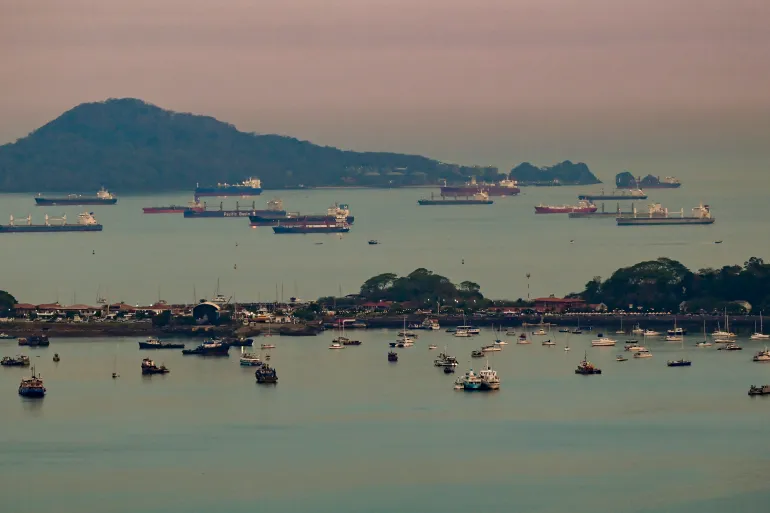
According to US officials, China responded by detaining nearly 70 Panamanian-flagged ships in March, a figure significantly higher than typical levels. Authorities in Washington described the move as an attempt to politicise global shipping and undermine Panama’s sovereignty.
US Secretary of State Marco Rubio expressed concern over the situation, stating that any effort to pressure Panama threatens broader regional stability. Officials also warned that such actions could disrupt international trade, particularly because vessels registered under Panama’s flag play a significant role in global shipping and US commerce.
China has rejected the accusations, previously criticising the court’s decision and denying claims of economic coercion. Beijing has also accused the United States of attempting to damage its reputation in Latin America through political narratives.
The dispute comes at a time of heightened geopolitical focus on the Panama Canal, a strategic waterway that handles a significant share of global maritime trade. The issue gained further attention after US President Donald Trump raised concerns about foreign influence over the canal and signalled interest in reasserting US control.
In addition to Panama, major global shipping companies have reportedly been affected. Industry leaders such as Maersk and Mediterranean Shipping Company faced scrutiny from Chinese authorities, while Chinese shipping giant COSCO has reportedly suspended operations at one of the canal’s key terminals.
Meanwhile, CK Hutchison is pursuing international arbitration against Panama, seeking billions of dollars in damages over the termination of its contracts.
Analysts say the situation highlights how global shipping routes are increasingly becoming tools of geopolitical competition. Strategic chokepoints like the Panama Canal, the Strait of Hormuz, and the Red Sea are now seen as vulnerable to political pressure, with governments recognising their importance in global trade.
Experts warn that as tensions rise, shipping and maritime infrastructure could increasingly be used as leverage in international disputes, raising concerns about the stability of global supply chains and economic security.



.jpg)
.jpg)

.jpg)