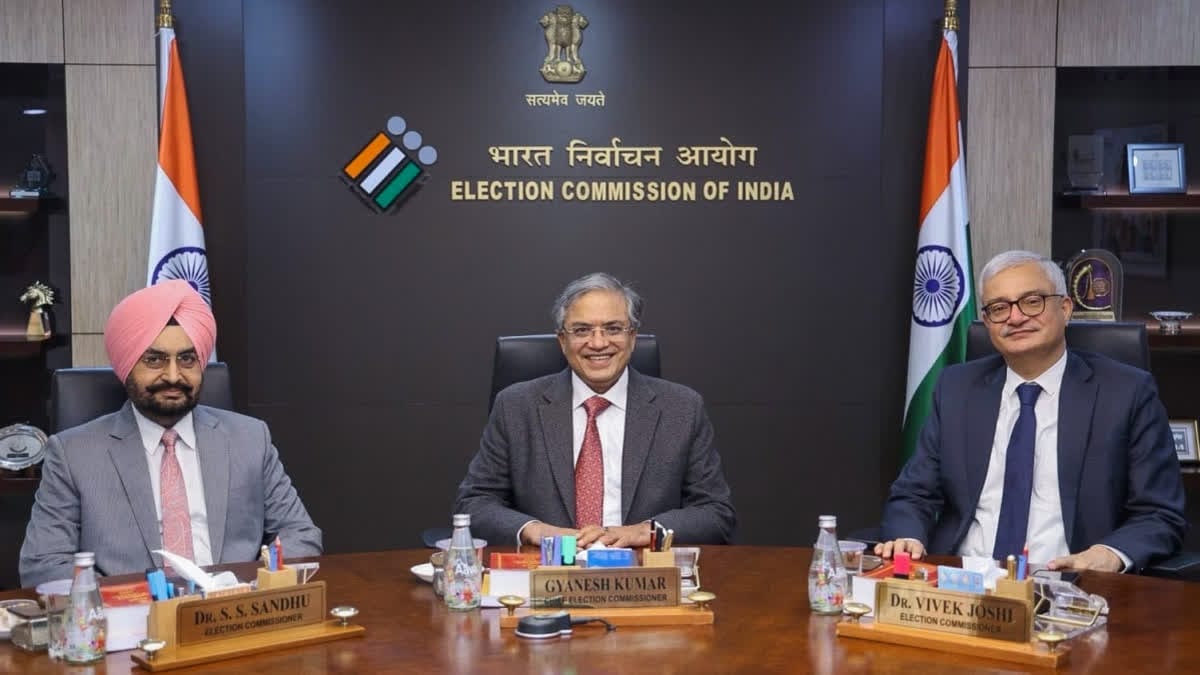

Questions over the functioning of the Election Commission of India have emerged following a report that two of its three Election Commissioners, Sukhbir Singh Sandhu and Vivek Joshi, formally recorded objections at least 14 times over a period of 10 months.
According to the report, the objections concerned decisions and communications issued in the name of the Election Commission which the two commissioners said had been taken or issued without their knowledge or required approval. Four of the reported objections were made on a single day.
The developments have come amid the nationwide expansion of the Special Intensive Revision, or SIR, of electoral rolls. The exercise began in Bihar in June 2025 and was subsequently extended to several other States and Union Territories. The process has generated significant public debate over the addition, deletion and restoration of names in electoral rolls.
The reported objections, however, were not limited to the SIR exercise. They covered several aspects of electoral-roll management, including registration of new voters, deletion and restoration of names, appeals relating to electoral-roll decisions and the handling and security of voter databases.
### 14 objections over 10 months
The report says that Sandhu and Joshi placed formal objections on record at least 14 times during the 10-month period. Four objections were reportedly recorded on the same day.
Some of the objections reportedly questioned whether communications issued in the name of the Election Commission had received the necessary approval. In April, both commissioners are reported to have separately reminded senior officials that communications issued in the name of the Commission should follow the required approval process.
The issue is significant because the Election Commission consists of the Chief Election Commissioner and two Election Commissioners, and its decisions are governed by a legal framework that provides for unanimity as far as possible and a majority view when the commissioners differ.
### Questions over changes to Form 6
One of the issues reportedly raised by the two commissioners concerned Form 6, which is used by citizens seeking inclusion in the electoral roll.
According to the reported investigation, a new question relating to whether an applicant's parents were included in an earlier SIR electoral roll was introduced in the form. The two commissioners reportedly questioned the legal process through which the change had been made and raised concerns over whether amendments to the relevant rules were required.
The matter became part of the broader discussion over how electoral-roll procedures were being changed and whether such changes were being implemented with the required approval.
### Concerns over centralisation of voter-data access
Another major issue concerned the management of the electoral-roll database and the technology used to handle voter records.
According to the report, Sandhu and Joshi expressed concerns that technical control over the electoral database was becoming centralised in Delhi. They reportedly warned that such a system could affect the access and role of election officials working at the State and local levels.
The two commissioners also reportedly raised questions about the integrity and functioning of the software used for electoral-roll management and sought greater scrutiny of the system.
### The Goa case involving 97 voters
A case from Goa was cited as an example of the concerns surrounding the technology used for voter-roll management.
According to the reported investigation, 97 people who had submitted documents and were found eligible by Electoral Registration Officers still did not make it into the final electoral roll. The report said the problem was linked to the software, which did not allow officials to reverse an earlier deletion in the required manner.
The case was highlighted as an example of the potential problems that can arise when local electoral officers depend on a centralised technological system to make changes to voter records. ([Vibes of India][3])
### Questions over electoral-roll appeals in West Bengal
The report also referred to the handling of appeals concerning electoral-roll decisions in West Bengal.
According to the report, questions were raised over the process through which certain appeals relating to the inclusion or deletion of voters were filed and handled. The commissioners reportedly sought information about who had authorised such actions and how they had been processed.
These concerns were linked to the larger issue of accountability in the management of electoral-roll records and the division of responsibility between central and State-level election officials.
### Commissioners wrote to the Cabinet Secretary
The reported disagreements also extended to administrative and technological oversight.
According to the investigation, Sandhu and Joshi separately wrote to Cabinet Secretary T V Somanathan after changes in work allocation raised concerns over the supervision of the technological infrastructure supporting electoral rolls.
The commissioners reportedly said that these changes had been made without their prior knowledge. The episode is notable because the Election Commission is a constitutional body and its three members collectively participate in its decision-making process.
### Full Commission meeting after four months
According to the report, Chief Election Commissioner Gyanesh Kumar and the two Election Commissioners held a full meeting on September 9. The meeting reportedly came after a gap of around four months during which no such full meeting had taken place.
The meeting assumed significance in the context of the objections raised by Sandhu and Joshi over electoral-roll management, administrative decisions and the functioning of the Commission. ([Internationly][2])
### Election Commission rejects suggestion of internal disagreement
Following the report, Election Commission sources rejected the suggestion that the Commission's final decisions reflected internal disagreement.
The Commission said that all decisions taken by it, including those related to the SIR exercise, had the approval of Chief Election Commissioner Gyanesh Kumar and Election Commissioners Sukhbir Singh Sandhu and Vivek Joshi.
The Commission's position is that while individual commissioners may raise questions or concerns during internal discussions, the final decisions of the constitutional body were taken unanimously. Officials also referred to the legal framework under which the Commission is expected to seek unanimity as far as possible, with a majority decision applicable where differences remain.
The issue therefore has two distinct aspects: formal objections reportedly recorded by two Election Commissioners on several electoral and administrative matters, and the Election Commission's clarification that its final decisions were unanimously approved.
Further official explanations and records concerning the SIR process, voter registration, electoral-roll deletions and the technology used to manage voter data are likely to determine the precise context of the objections and how the concerns were addressed.


.jpg)
.jpg)