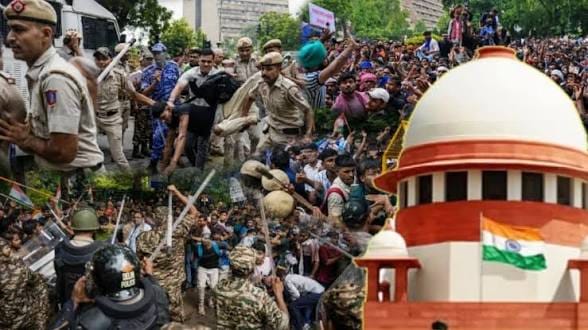


The restrictions imposed in Delhi ahead of the proposed October 10 protest by the Cockroach Janata Party (CJP) have become a matter of concern before the Supreme Court. The issue was raised after reports of metro station closures and disruption to train services ahead of the planned demonstration. Senior advocates asked the court to intervene, arguing that the restrictions could affect the movement of ordinary citizens as well as those intending to participate in the protest.
Senior advocate and Member of Parliament Kapil Sibal raised the matter before a bench headed by Chief Justice of India Surya Kant. He highlighted concerns over the reported closure of metro stations and cancellation of trains, arguing that such measures could make it difficult for people to travel across the national capital. Sibal urged the court to examine the restrictions, describing the proposed demonstration as a peaceful protest.
During the hearing, Sibal said that train services had been cancelled and metro stations had been closed, leaving people unable to move freely from one place to another. He questioned the situation in the country and raised concerns about the impact of extensive restrictions on peaceful demonstrations and public movement.
Senior advocate Gopal Sankaranarayanan also objected to the restrictions. He argued that the entire city could not be shut down because of administrative shortcomings. The concerns raised by the lawyers focused on whether measures introduced ahead of a protest could impose an excessive burden on residents who were not directly involved in the demonstration.
Justice Joymalya Bagchi, while addressing the matter, acknowledged the importance of the right to protest and the freedom to form associations. At the same time, he stressed that these rights must be exercised in accordance with the law. The court observed that the right to organise and express dissent does not mean that legal requirements and established procedures can be ignored.
Justice Bagchi said the court would first need to understand the ground realities surrounding the proposed demonstration before reaching a conclusion. He also drew attention to the distinction between a protest held with the necessary permission and one conducted without it. The broader point of the court's remarks was that the right to protest cannot simply be denied, but those organising demonstrations are also expected to follow the applicable legal framework.
The court further highlighted the need to strike a balance rather than impose a blanket prohibition on a protest. Justice Bagchi observed that stopping a demonstration altogether could affect the rights of the organisation and those seeking to express their views. The court indicated that the issue required a careful assessment of competing rights and the circumstances surrounding the proposed event.
During the hearing, the bench noted that two sides needed to be considered while attempting to strike this balance. On one side are citizens seeking to protect their fundamental rights and maintain access to ordinary public services. On the other is the group seeking to hold a protest. The court questioned how it could arrive at a balanced conclusion without sufficient information about both sides.
The Supreme Court asked the petitioners to provide additional details about the matter. The lawyers said they would return with further information. The hearing therefore highlighted the importance of considering both the right to peaceful protest and the need to maintain public order and protect the convenience of other citizens.
The case has drawn attention because it comes ahead of CJP's proposed October 10 demonstration in Delhi. Questions have been raised about the extent of restrictions on metro and rail services and their impact on daily travel. The precise status and scope of any transport restrictions should, however, be confirmed through official announcements by the relevant authorities and transport agencies.



.jpg)
.jpg)