
Sambit Patra Targets Protests at Delhi's Jantar Mantar
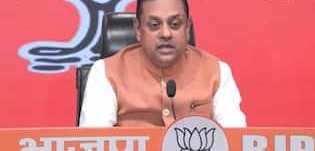
New Delhi: BJP national spokesperson and Member of Parliament Sambit Patra has launched a sharp attack on the protests taking place at Jantar Mantar in the national capital. Describing the demonstrations as a flop show involving disruptive elements, Patra argued that the scenes being shown on television and social media should not be treated as a reflection of the entire country.
According to Patra, India remains peaceful and continues to move forward under what he described as good governance. He maintained that demonstrations in particular locations do not necessarily represent the political mood or social conditions across the country.
The BJP leader also questioned the intentions of opposition leaders involved in the political debate surrounding the protests. He alleged that certain political actors were attempting to create an atmosphere of disorder through their actions and statements.
Patra's remarks reflect the BJP's criticism of the opposition's approach to the demonstrations. However, assessing the scale and significance of a protest requires consideration of its stated objectives, participation and the views of the people involved, rather than relying exclusively on statements made by political opponents.
Sambit Patra Launches Attack on Rahul Gandhi
Patra also targeted Congress leader Rahul Gandhi, criticising his remarks in connection with the political developments surrounding the protests.
In his statement, the BJP spokesperson referred to a visit by political leaders to Rashtrapati Bhavan. He alleged that Rahul Gandhi made inappropriate remarks after leaving the President's official residence and argued that the comments did not reflect the conduct expected from a responsible political leader.
Patra used strongly critical language while describing Gandhi's remarks. He accused the Congress leader of taking political disagreements beyond the usual boundaries of party politics and involving constitutional institutions in the controversy.
The BJP leader argued that political leaders should exercise restraint when discussing institutions that occupy an important place in India's constitutional framework. His criticism focused particularly on what he described as an attempt to connect the President's office with street-level political protests.
The remarks came amid heightened political discussion surrounding demonstrations in Delhi and the opposition's criticism of the government. However, a complete assessment of the controversy would require examining Gandhi's original statement, its context and the responses from the other parties involved.
BJP Leader Accuses Rahul Gandhi of Politicising the President's Office
One of the central points in Patra's statement was his allegation that Rahul Gandhi had dragged the office of the President into political controversy.
Patra argued that the President's position should remain above partisan disputes. According to the BJP spokesperson, political disagreements should not be used to bring a constitutional office into arguments surrounding demonstrations or party-level confrontations.
He claimed that Gandhi's remarks attempted to connect the President with political disorder on the streets. Patra described this as an issue concerning the dignity of constitutional institutions and democratic conventions.
The BJP leader further argued that political leaders have a responsibility to respect the constitutional position of the President, irrespective of their disagreements with the government or other political parties.
These statements represent Patra's political interpretation of the controversy. The precise meaning and implications of the allegations can only be assessed by examining Gandhi's complete remarks and the circumstances in which they were made. A political accusation, by itself, does not establish that a constitutional convention has been violated.
Patra Says Protest Images Do Not Represent the Entire Country
Patra also challenged the portrayal of the Jantar Mantar demonstrations in television coverage and on social media. He argued that images of protests in the capital should not be interpreted as a representation of the mood throughout India.
According to the BJP spokesperson, normal life continues across the country and India is progressing under the leadership of Prime Minister Narendra Modi. He maintained that demonstrations at particular locations should not automatically be treated as evidence of widespread instability or public dissatisfaction.
His remarks appeared aimed at countering the political narrative surrounding the protests and the criticism directed at the government by opposition leaders.
Patra's position was that the demonstration at Jantar Mantar did not represent the broader public sentiment of the country. However, determining the extent of public support for or opposition to a political issue requires evidence beyond statements made by party representatives.
The significance of a protest is generally assessed through factors such as participation, the issues being raised, public responses and the wider political context.
'Modi Versus Mir Jafar' Remark in Political Attack
Patra also described the broader political confrontation as a battle between Prime Minister Narendra Modi and what he called 'Mir Jafar'. The comparison was used as part of his criticism of opposition leaders and their political strategy.
The name Mir Jafar is frequently used in Indian political rhetoric as a metaphor for betrayal. By invoking the comparison, Patra sought to portray the opposition's actions in a strongly critical light.
He alleged that some opposition leaders were attempting to weaken the government's political position while creating an atmosphere of disorder. He presented the confrontation as more than a routine disagreement between the ruling party and opposition, framing it instead as a contest between democratic governance and what he described as disruptive politics.
The remark represents Patra's political characterisation of the dispute. It should be understood as rhetoric used in a partisan argument rather than as an independently established description of the opposition's conduct.
Debate Over Democracy, Protests and Constitutional Institutions
The controversy surrounding the Jantar Mantar demonstrations has brought renewed attention to the relationship between political protests, constitutional institutions and public order.
In his remarks, Patra criticised the opposition and questioned the way the demonstrations were being portrayed. He also accused Rahul Gandhi of involving the President's office in political controversy and defended the government's record under Prime Minister Narendra Modi.
At the same time, peaceful protest is an established form of political expression in a democracy, while maintaining public order is a responsibility of the authorities. In situations involving demonstrations, the relevant questions include the grounds for any restrictions, the conduct of participants and the legal framework governing public gatherings.
A balanced understanding of the controversy requires consideration of the statements made by all sides and the factual context in which they were delivered.
Political Reactions Remain Central to the Controversy
Patra's remarks have added to the political debate surrounding the protests in Delhi. His criticism focused on Rahul Gandhi, the role of the President's office in political discourse and the wider confrontation between the BJP and opposition parties.
He maintained that the Jantar Mantar demonstrations did not represent the country as a whole and argued that India's progress under the current government should be viewed separately from political protests in the capital.
The allegations regarding Gandhi's remarks and the characterisation of the protests should be treated as Patra's statements unless independently substantiated. Reviewing the original remarks, the wider context and responses from the other parties would provide a clearer understanding of the dispute.
The episode highlights the continuing political contest over how protests are portrayed, how constitutional institutions are discussed and how the ruling party and opposition define the country's political direction.

.jpg)
.jpg)