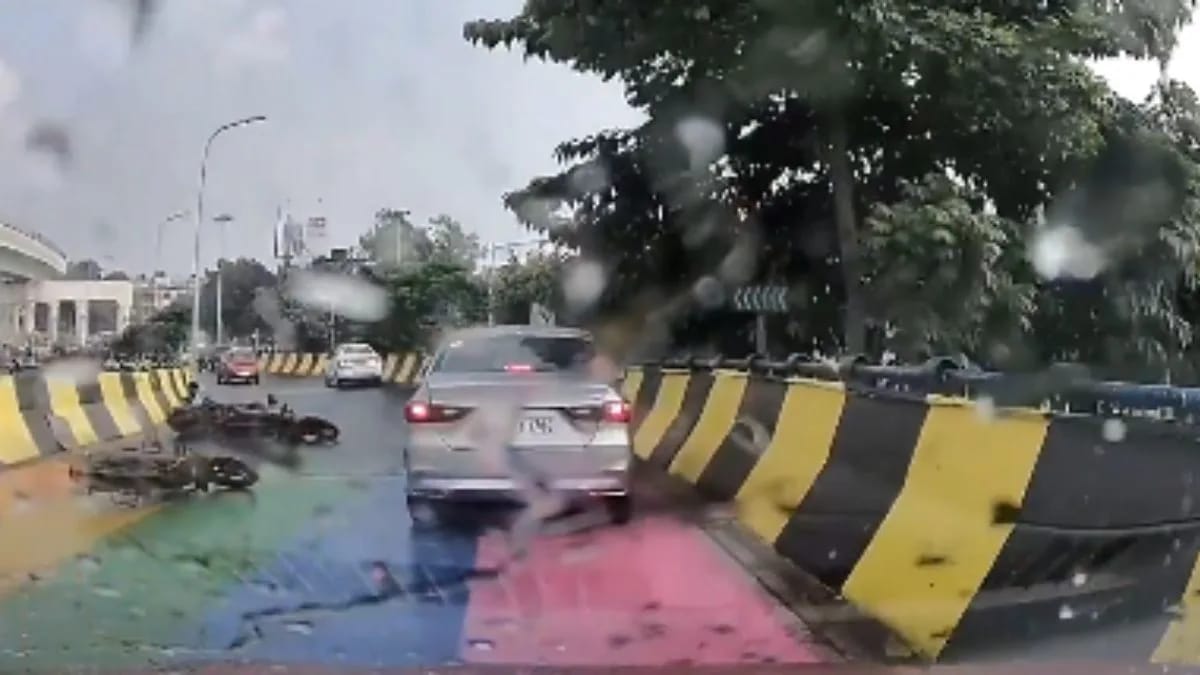



A road safety concern has emerged in Kolkata, West Bengal, after motorcycles reportedly slipped on a rainbow-painted section of the Chingrighata Flyover following light rain. According to the available information, three motorcycles lost their balance on the coloured stretch. A video of the incident has since circulated on social media, bringing attention to the potential risks posed by road surfaces during wet weather.
The incident has prompted questions about whether the painted section became slippery after rain and whether the road surface provides sufficient grip for two-wheeler tyres. Motorcycles and scooters require adequate traction to remain stable, particularly when riders brake, turn or travel over uneven or wet surfaces. If the road becomes slippery, maintaining control can become more difficult, increasing the risk of falls and collisions.
However, the exact cause of the reported incident has not been independently established. A technical assessment would be needed to determine whether the painted surface contributed to the motorcycles slipping or whether other factors, such as vehicle speed, tyre condition, water accumulation or riding conditions, played a role.
Coloured road markings are commonly used in urban areas for traffic management, pedestrian zones, cycle lanes and other road-related purposes. Such markings can help make particular sections more visible, but their application must also take road safety into account. The material used should provide adequate friction under different weather conditions, including rain, when the surface can become more challenging for two-wheeler riders.
The Chingrighata Flyover incident has renewed discussion about how decorative road treatments are selected and maintained. A colourful road surface may improve visibility or appearance, but it should not compromise the grip needed by vehicles. The suitability of any paint or coating depends on the material used, how it is applied, the condition of the underlying road and its performance when wet.
Flyovers can present additional risks because traffic may be moving at relatively high speeds, and riders have limited time to respond when a motorcycle begins to skid. A sudden loss of balance can also affect nearby vehicles, potentially leading to secondary accidents. For this reason, road design and maintenance authorities need to consider the safety of all road users, especially two-wheeler riders who are more exposed in the event of a fall.
The video circulating online has brought the incident to wider public attention. Nevertheless, a video alone cannot establish the technical cause of an accident. A proper inspection of the painted surface, drainage conditions and skid resistance would help determine whether the road requires maintenance or corrective measures.
If an inspection confirms that the coloured section becomes dangerously slippery when wet, the relevant authorities may need to consider improvements to the surface material or other appropriate safety measures. Such steps would help reduce the likelihood of similar incidents and improve confidence among commuters using the flyover.
For now, the reported motorcycle slips on the rainbow-painted stretch of Chingrighata Flyover have raised important questions about road safety in wet conditions. Further clarification from the relevant authorities and a technical assessment would be needed to establish the cause and determine whether changes to the road surface are necessary.




.jpg)
.jpg)