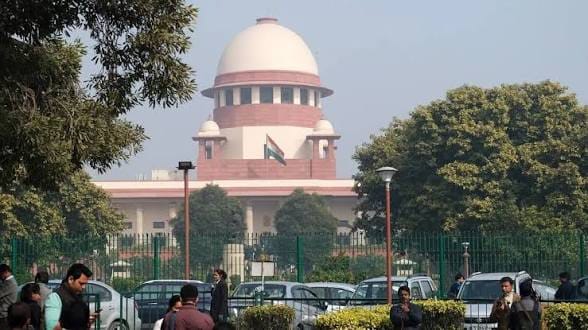

New Delhi: The Supreme Court has raised important questions about freedom of expression, the definition of journalism and the protection of journalists while hearing petitions concerning alleged incidents of mistreatment, assault and detention during protests in Delhi on October 10 and 11. During the hearing, the court observed that if every citizen begins claiming to be a journalist, it could create difficulties for everyone.
The court noted that under the right to freedom of expression, any individual may claim to be a journalist. This raises questions about how to distinguish accredited journalists from people active on digital platforms and how to ensure adequate protection for those engaged in professional journalism.
The matter was heard by a bench comprising Chief Justice of India Surya Kant and Justice Joymalya Bagchi. The bench described the allegations of assaults on women journalists as serious. The proceedings focused on petitions relating to the alleged treatment of journalists during the October protests.
During the hearing, senior advocate Indira Jaising raised the allegation that a male police officer had assaulted a woman journalist. She suggested setting up a committee comprising former women judges and former Indian Police Service officers to examine complaints made by the alleged victims. Her proposal was aimed at securing an examination of the complaints through an independent panel.
Solicitor General Tushar Mehta appeared for the Centre and the Delhi Police. The bench asked him to ensure that no punitive action was taken against the woman journalist concerned. The court also clarified that, at this stage, the hearing would remain limited to the victim mentioned in the petition.
The issue of identifying journalists has become increasingly significant with the expansion of digital platforms and social media. Mobile phones allow people to record events, publish videos and share information with large audiences. However, this has also raised questions about the distinction between professional reporting and other forms of online content creation.
During the proceedings, Tushar Mehta argued that anyone carrying a mobile phone could claim to be a journalist. He also remarked that some people make reels in the name of journalism. His comments brought attention to the challenge of identifying professional journalists in an environment where news, commentary and short-form digital content often appear on the same platforms.
The court's observations highlight the need to consider both freedom of expression and the safety of journalists. Reporting on public demonstrations can involve risks, and allegations of assault, mistreatment or detention require careful examination. At the same time, determining the facts of an incident requires an impartial assessment of the complaints and the available evidence.
The suggestion to establish a committee of former women judges and former police officers was raised by Indira Jaising during the hearing. The court's stated direction at this stage was limited to the woman journalist named in the petition, and the bench clarified the scope of the proceedings accordingly.
The case brings renewed attention to the responsibilities of law enforcement agencies during public demonstrations, the protection of journalists in the field and the challenges posed by digital media. The allegations raised during the hearing should be distinguished from findings established through an investigation or a judicial determination.
For now, the Supreme Court has limited the hearing to the specific woman journalist mentioned in the petition. Further conclusions about the alleged incidents would depend on the relevant proceedings and verified information.

.jpg)
.jpg)