

New Delhi: Air pollution has once again become a major concern across Delhi-NCR as changing weather conditions coincide with deteriorating air quality. The Air Quality Index (AQI) has crossed 300 in several areas, prompting authorities to implement Stage 1 of the Graded Response Action Plan (GRAP).
The capital and neighbouring regions are experiencing sunny conditions during the day and cooler weather at night. As temperatures begin to fall and wind speeds slow, dust particles and vehicle emissions may remain suspended in the atmosphere for longer periods, worsening local air quality.
AQI Crosses 300 in Several Areas
The rise in AQI has raised concerns about the health risks associated with polluted air. An AQI above 300 falls within the very poor category under India's national AQI classification and can pose health risks, particularly for children, older adults and people with respiratory or heart conditions.
Authorities have introduced GRAP Stage 1 as part of efforts to reduce emissions and control sources of pollution. The measures focus on road dust, construction-related dust, waste burning and other activities that contribute to deteriorating air quality.
What Restrictions and Measures Come Under GRAP-1?
The Graded Response Action Plan is a framework for implementing pollution-control measures according to the severity of air pollution in Delhi-NCR.
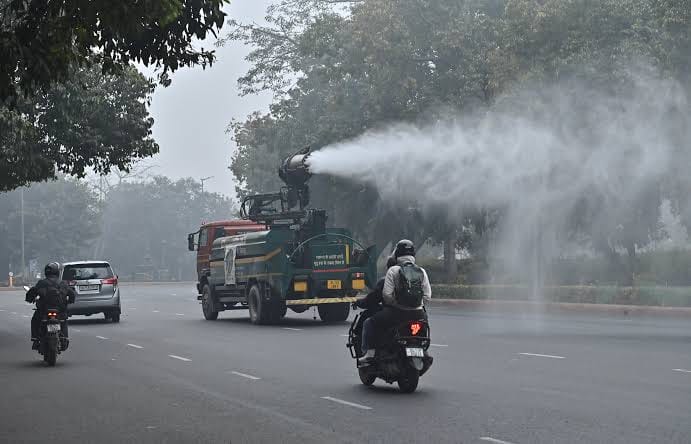
Stage 1 includes measures such as regular mechanical or water-assisted road cleaning, dust suppression, stricter enforcement of construction-site dust-control rules and action against the open burning of waste.
Authorities may also monitor polluting activities and ensure compliance with applicable environmental standards. Construction and demolition sites are expected to follow prescribed dust-control measures.
The specific restrictions applicable to any activity depend on the official directions issued by the relevant authorities. Stage 1 should not automatically be interpreted as a blanket ban on all construction or vehicle use.
What Did Delhi's Environment Minister Say?
Delhi Environment Minister Manjinder Singh Sirsa claimed that GRAP had been implemented relatively late in the pollution season compared with previous years.
The statement came as air quality deteriorated across the region. Authorities are expected to focus on monitoring pollution sources, enforcing existing regulations and implementing measures designed to reduce emissions and airborne dust.
Why Are Falling Temperatures and Slow Winds a Concern?
Weather conditions can influence how pollutants accumulate in the atmosphere. According to the available information, night temperatures may fall to around 18 degrees Celsius in the coming days.
As temperatures decline and wind speeds decrease during the evening, pollutants may remain concentrated near the ground rather than dispersing quickly. Vehicle exhaust, road dust and particles from construction activities can contribute to higher pollution levels under such conditions.
Weather is only one part of the problem. Traffic emissions, construction work, road dust and other human activities also contribute to Delhi-NCR's air pollution.
How Can Residents Protect Themselves?
When air quality deteriorates, residents should take precautions to reduce exposure, especially those who are more vulnerable to pollution.
- Avoid prolonged outdoor exercise when pollution levels are high.
- Limit unnecessary exposure to heavy traffic and areas with visible smoke or dust.
- Consider a well-fitting N95 mask when outdoor exposure is unavoidable.
- Children, older adults and people with existing respiratory or cardiac conditions should take extra precautions.
- Seek medical advice if persistent coughing, breathing difficulties or chest discomfort develops.
- Check official AQI updates and follow public-health advisories.
What Lies Ahead for Delhi-NCR's Air Quality?
Air quality in Delhi-NCR will depend on weather conditions, wind speed and the level of local emissions in the coming days. Cooler nights and slower winds may allow pollutants to accumulate, making enforcement of pollution-control measures particularly important.
With GRAP Stage 1 in effect, authorities will need to focus on dust suppression, compliance checks and action against major pollution sources. Residents should continue monitoring official air-quality reports for updated readings and any additional restrictions.




.jpg)
.jpg)